Newsletter
Join the Community
Subscribe to our newsletter for the latest news and updates

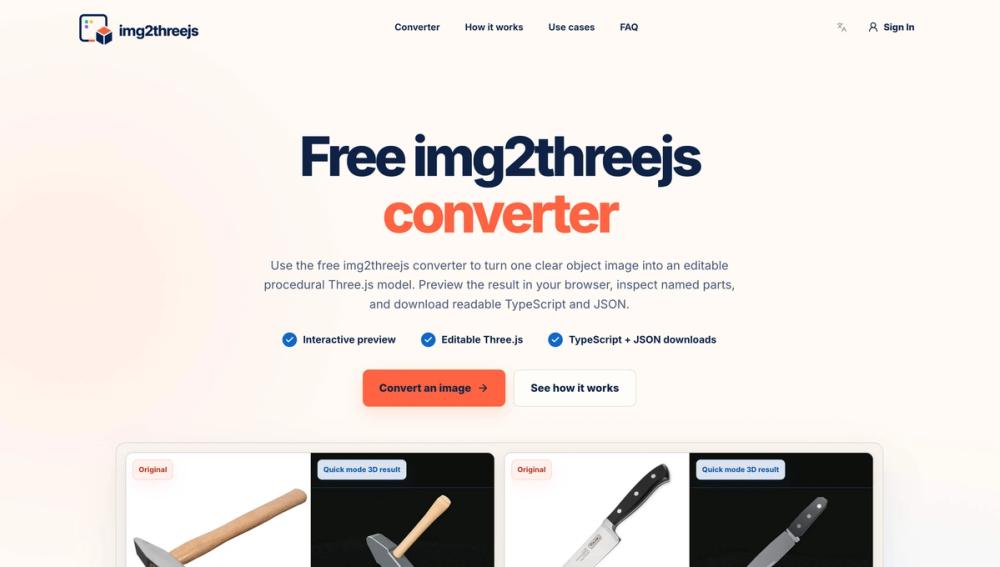
img2threejs is a online image to Three.js converter. Create editable web 3D models, preview named parts, and download TypeScript and JSON.
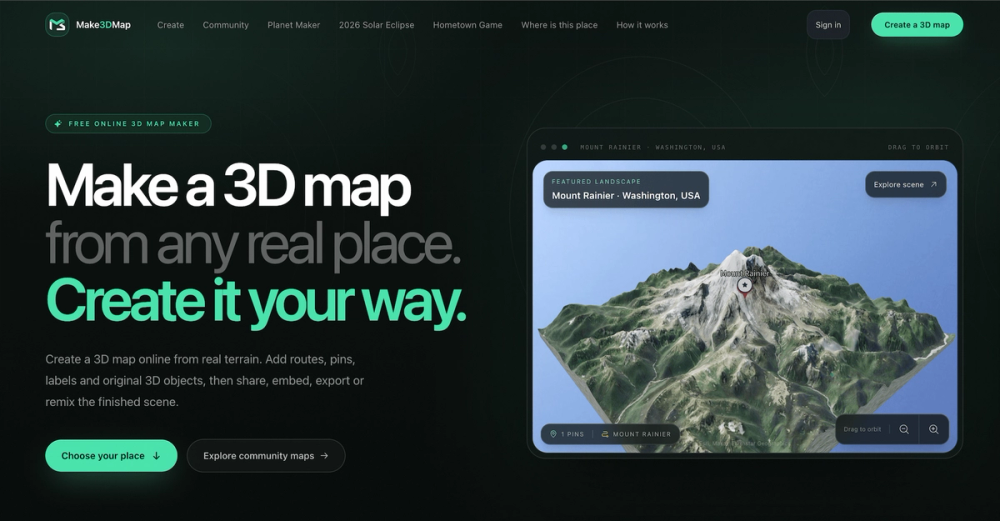
AI-powered 3D map maker for creating real-elevation 3D terrain maps, interactive worlds, and custom planets online.
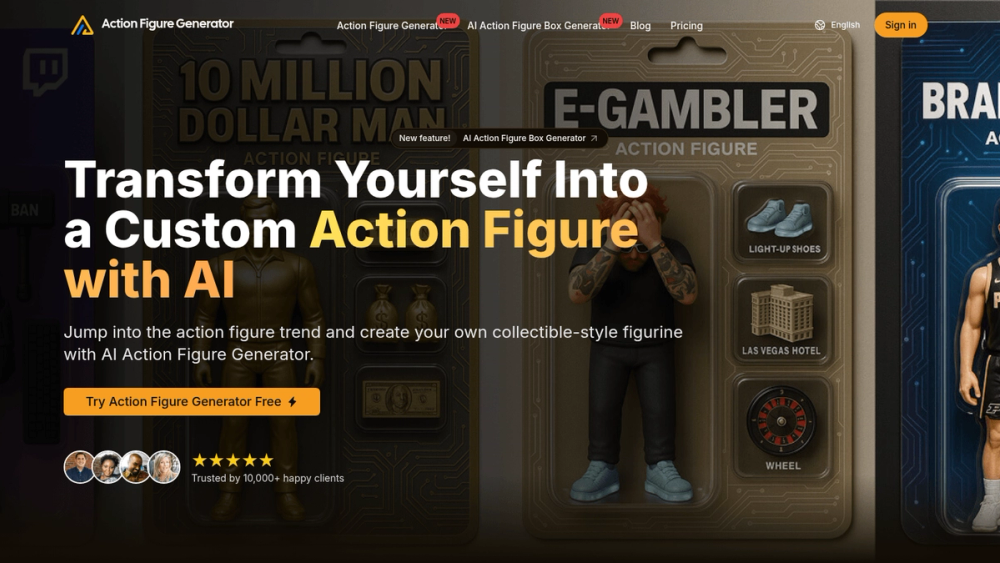
Create personalized action figures with our AI-powered Action Figure Generator. Turn your photos into collectible figurines.
img2threejs is an image-to-Three.js converter that turns reference images into editable procedural 3D models.
Upload a clear image of an object, preview the generated model in your browser, and export readable Three.js TypeScript code and a structured JSON specification.
Unlike many image-to-3D tools that return a single opaque mesh, img2threejs creates named components, materials, geometry, and transforms. This makes the result easier to inspect, modify, animate, and integrate into a web application.
img2threejs is designed for developers, designers, indie makers, and product teams that need a fast starting point for browser-based 3D.
Convert a product photo into an initial interactive 3D model for e-commerce pages, product explainers, landing pages, and configurators.
Because the output contains named parts, developers can change materials, highlight features, rotate components, or connect individual parts to clicks and application state.
Create a structured draft of a tool, appliance, weapon, furniture item, or mechanical object before investing in final 3D modeling, texturing, collision geometry, and animation.
Use the generated TypeScript as a foundation for WebGL experiments, educational projects, technical demonstrations, interactive storytelling, and browser-based visualization.
The dimensions, materials, colors, components, lighting, and animation can all be modified with a normal Three.js and Git workflow.
Named components make it easier to explain how an object is assembled, highlight individual parts, and build interactive technical diagrams or educational experiences.
Upload a PNG or JPG containing one complete, clearly visible object.
For better results, use an image with:
Product photos and isolated hard-surface objects usually work better than people, animals, hair, fabric, glass, smoke, or crowded scenes.
Agent mode supports up to three reference images. Extra angles can help clarify hidden connections, controls, attachments, and smaller details.
img2threejs examines the object’s silhouette, components, proportions, orientation, materials, repeated elements, and recognizable details.
Visible parts can be reconstructed with greater confidence. Surfaces or connections that are not shown in the images must be approximated.
The visible structure is converted into a validated procedural specification containing named parts, geometry, materials, dimensions, positions, rotations, and component relationships.
A deterministic builder then assembles the specification into a structured Three.js scene.
The result appears in an interactive browser preview. You can orbit around the model, zoom in, inspect its structure, and compare it with the reference image.
You can then export:
The TypeScript factory returns a reusable THREE.Group, allowing you to adjust dimensions, replace geometry, modify materials, attach events, or add animation.
img2threejs currently focuses on editable code rather than GLB, OBJ, FBX, or STL export.
Quick mode is designed for fast experimentation and simple procedural drafts.
It is useful for testing reference images, exploring ideas, previewing results, and downloading editable Three.js code.
Quick mode includes three free generations per day. After the daily free allowance, each Quick generation costs 1 credit.
Agent mode is intended for more detailed or complex objects.
It uses a longer cloud workflow involving reference analysis, procedural construction, rendering, visual review, and refinement. Multiple reference images can be used to reduce uncertainty.
Agent jobs continue running in the cloud even if you close the browser. Sign in again with the same Google account and open Generation history to check the progress or view the result.
Agent mode is not free because it consumes significantly more AI model capacity and cloud computing resources.
Agent jobs are priced according to their estimated complexity and usually cost 35–50 credits.
The quote may consider:
The exact price is shown and locked before generation begins.
If the system produces a saved, viewable result, the quoted credits are consumed even if the model still needs manual refinement. If no viewable result is produced, the reserved credits are returned in full.
| Plan | Price | Permanent Credits |
|---|---|---|
| Starter Monthly | $14.99/month | 300 |
| Starter Yearly | $149/year | 3,600 |
| Pro Monthly | $39.99/month | 800 |
| Pro Yearly | $399/year | 9,600 |
Purchased credits do not expire. The number of Agent generations available depends on the complexity quote for each job.
img2threejs creates a real, multi-part Three.js scene, but the result is a procedural approximation—not a photo-grade 3D scan.
A single image cannot reveal exact depth, real-world scale, hidden surfaces, internal structures, or obscured connections. Additional views reduce uncertainty but do not turn the workflow into photogrammetry.
The strongest results usually come from isolated hard-surface objects with clear structure. Organic subjects, hair, fabric, transparent materials, highly reflective surfaces, complex vehicle bodies, and exact human likeness still require specialist 3D tools.
img2threejs is not intended to replace Blender, Maya, or professional 3D artists. It provides a fast, readable, browser-native starting point that developers can continue improving.
img2threejs helps developers convert images into editable Three.js models, turning static references into structured and interactive web 3D.