Newsletter
Join the Community
Subscribe to our newsletter for the latest news and updates

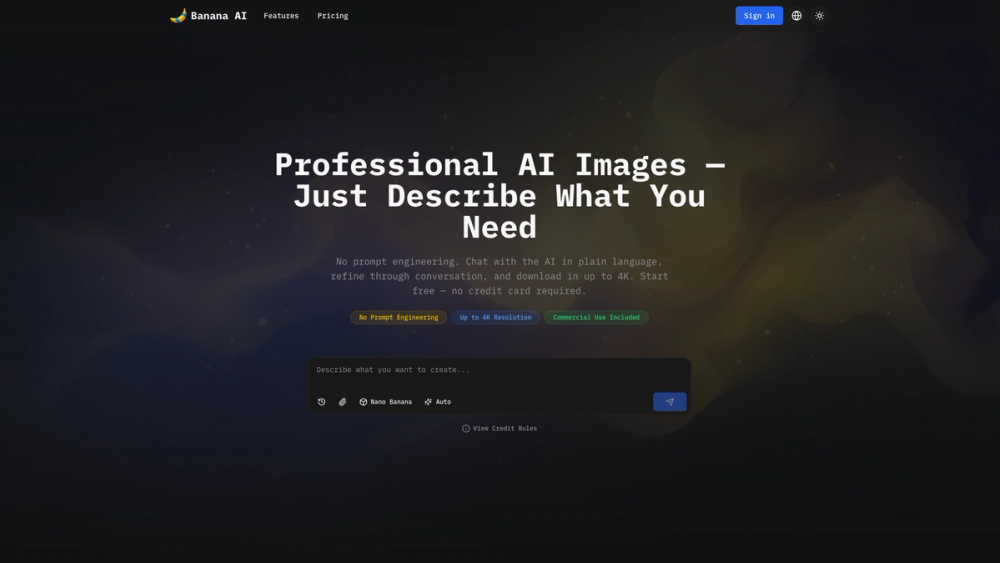
Banana AI is an AI image generation platform built around a conversational interface. Instead of filling out forms or writing structured prompts, users describe the image they want in natural language and refine it through multi-turn dialogue — much like messaging a designer. The platform offers three models: Flux Fast for quick 1-credit drafts, Nano Banana for standard-quality output in 2-5 seconds, and Nano Banana Pro for commercial-grade 4K images with accurate text rendering.
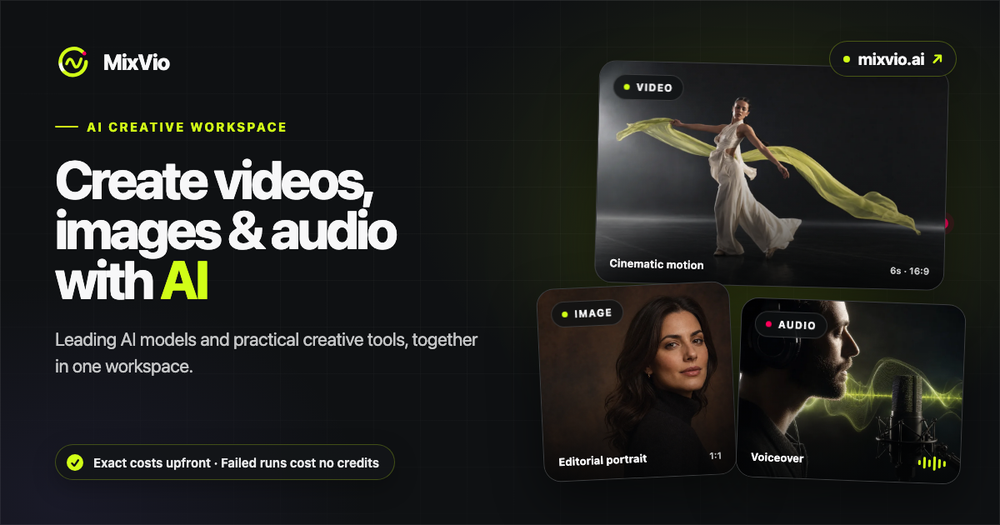
MixVio AI is a multimodal creative workspace for video, image, and audio generation. Creators can use leading AI models and practical tools in one place, see the exact credit cost before each run, and keep uploads and results private. Reserved credits are automatically released when a generation fails.
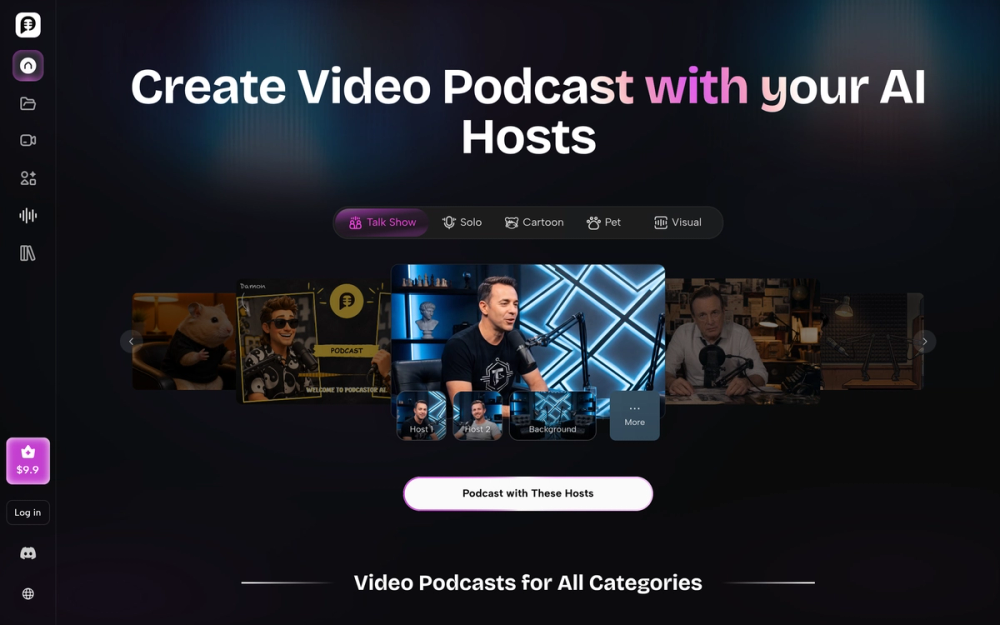
PodcastorAI is an AI video podcast studio that lets you choose or create AI hosts, add content from ideas, scripts, URLs, PDFs, documents, or existing audio, match them with natural AI voices or your cloned voice, and create polished solo or two-host audio and video podcasts without cameras or a production team. What is PodcastorAI
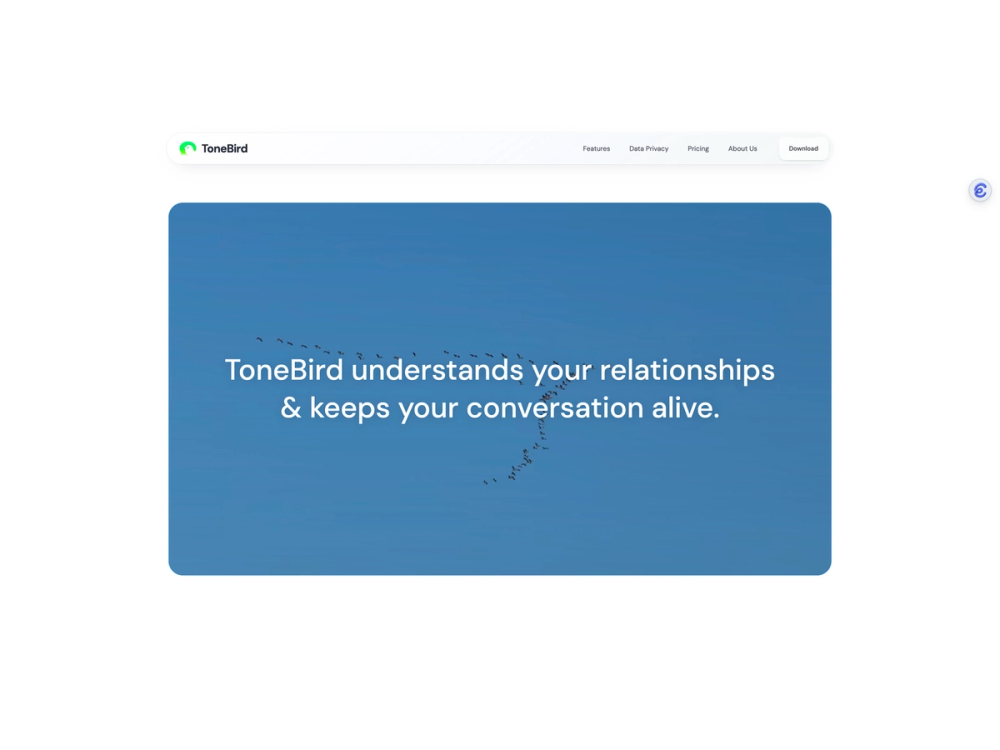
ToneBird is an AI reply assistant that understands your relationships, what you’ve already said, and where you left off. It drafts replies in your voice wherever you type; Gmail, Slack, and more.
The AI image generation market is projected to grow from $8.7 billion in 2024 to $60.8 billion by 2030, driven by adoption across e-commerce, content creation, marketing, and education. But the growth isn't just about better models — it's about better interfaces. The first wave of AI image tools (2022-2024) focused on generation quality, requiring users to master prompt engineering to get usable results. The current wave (2025-2026) focuses on accessibility: conversational workflows, iterative refinement, and integration into existing business processes.
This interface shift is significant because it determines who can actually use these tools. A Discord-based workflow with cryptic parameter flags serves power users and hobbyists. A chat-based interface that accepts plain-language instructions — "create a product photo on a white background," "now make it warmer," "add text that says FREE SHIPPING" — serves the far larger market of business users who need visual content but lack design expertise. Platforms like Banana AI are built around this premise, combining a conversational interface with multi-model flexibility (speed vs. quality), reference image support for brand consistency, and up to 4K output resolution.
Alongside interface evolution, two technical capabilities are reshaping the competitive landscape. First, accurate text rendering in generated images — once universally poor across AI models — is becoming a viable feature, particularly on models like Nano Banana Pro that use reasoning stages to plan text layout before generation. This opens use cases (product packaging, infographics, social media with text overlays) that were previously off-limits for AI-generated images. Second, character consistency across multiple generations is improving through reference image systems, allowing businesses to maintain visual identity across product lines, campaigns, and platforms. These capabilities, combined with credit-based pricing that brings per-image costs below $0.20, are driving AI image generation from a novelty into a standard production tool.